
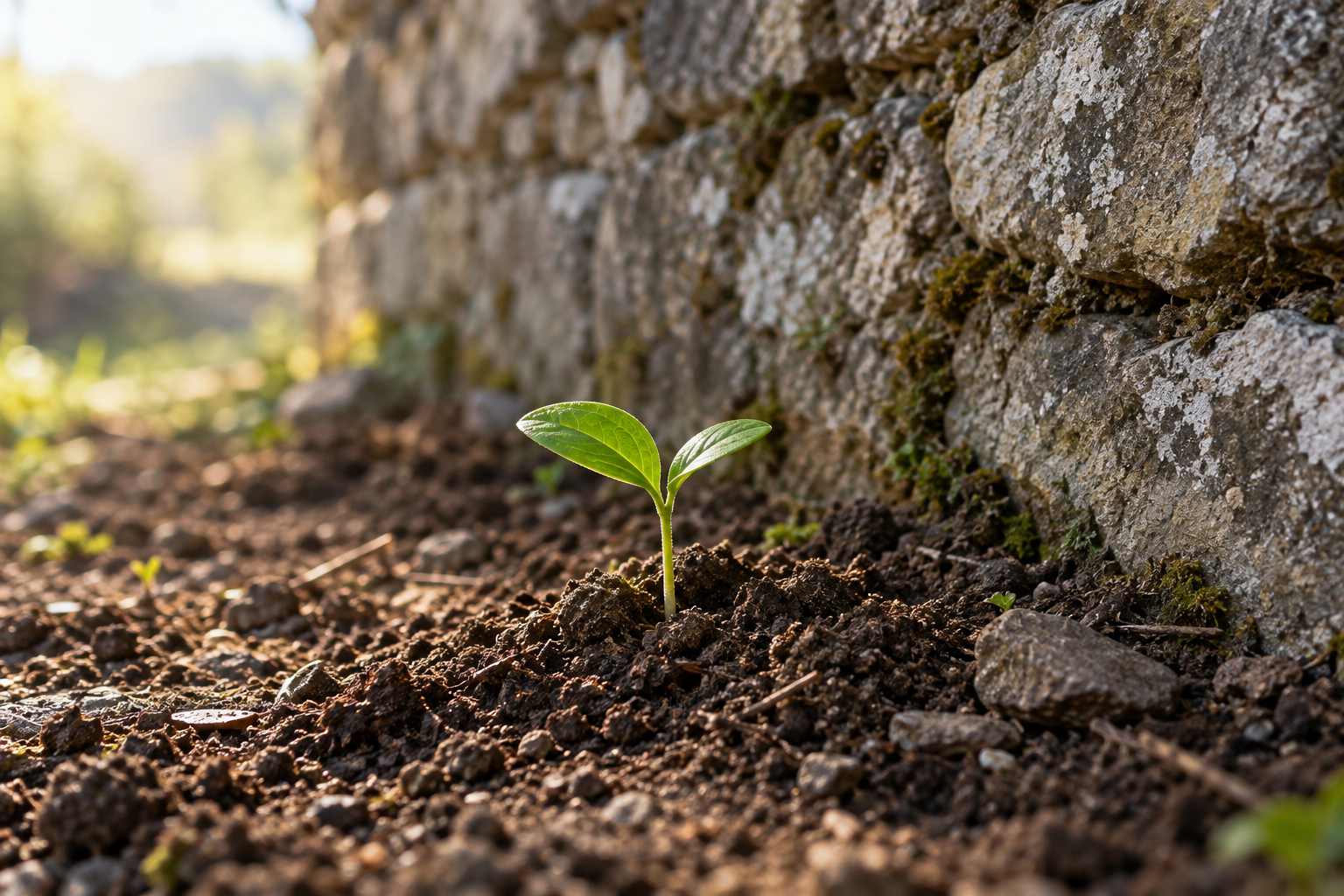
Sometimes something gets planted in us long before we understand what it will become. It may begin as a nudge, a restless feeling, a half-formed idea, a recurring thought that refuses to disappear. Maybe it’s a sense that there is something you are supposed to pursue, create, change, or become.
At first it may not look like much.
That’s the thing about seeds. They rarely look like what they’re capable of becoming. When you hold a seed in your hand, you cannot see the roots it’ll eventually put down. You cannot see the branches, the leaves, the shade, the fruit. Everything it may become is hidden inside something that looks small and incomplete. Our lives often work the same way.
Jesus used this imagery when he described a man scattering seed on the ground. That man slept and rose day after day, while the seed sprouted and grew, though he did not fully understand how. First the stalk, then the head, then the full grain.
Growth was happening before the harvest was visible.
That’s easy to forget when we look at our own lives. We want to understand where something is going before we invest too much in it. We want evidence. We want to know if our learning, our effort, our prayer, our preparation are producing something yet. But sometimes you can see the beginning of something long before you can understand what it’s becoming.
Years ago, during a difficult period in my life, I knew there was a direction that mattered to me, but I couldn’t see where it led. Fortress of Integrity wasn’t a business plan. There were no six pillars laid out. There were no courses, no books, no ecosystem. There were just ideas, thoughts, lessons, experiences, questions, things that I wrote down because they seemed important. At the time, many of them seemed disconnected.
Looking back now, they were seeds.
And here’s the strange part. We often participate in growth long before we realize what we’re doing. Studying, writing, praying, trying things. Learning from work, from leadership, from relationships, from failure, from things falling apart. Sometimes the lesson arrives through something you never would have chosen.
Looking backward, what looked random begins to form a pattern. And what looked like wandering might actually have been cultivation. That doesn’t mean everything in life is a grand sign, but it does mean that growth is often quieter and slower than we expect it to be.
Seeds are especially easy to overlook when life gets loud. Pain gets loud. Fear gets loud. Bills, responsibilities, uncertainty. When survival is front and center, anything without an immediate payoff can feel like a luxury. It’s easy to stop writing, stop learning, stop dreaming, stop making room for the thing that once mattered.
Sometimes that pause is necessary. Seasons are real, and responsibilities are real. But hard seasons can also convince us that something has disappeared, when in reality we just lost sight of it for a while.
In fact, sometimes the difficult season itself becomes part of the growth. Pain teaches something. Failure reveals something. Loss reshapes priorities. Responsibility builds discipline. Uncertainty deepens faith. That doesn’t mean every hard thing has a neat explanation. It means difficulty doesn’t automatically mean growth has stopped.
One of the fastest ways we sabotage growth is by constantly demanding evidence that it’s happening. Is this working? Am I far enough along? Did I waste my time? Maybe this is never going anywhere.
It’s like planting something and digging it up every few days to check the roots.
Roots grow before results show.
There is a season for roots and a season for fruit. Don’t confuse the two.
So instead of asking only, Where is the fruit?, try asking a different set of questions. What keeps returning to me? What begins to connect when I look backward? What experiences seem different when I reflect on them now?
These aren’t questions about inventing a grand narrative. They’re questions about paying attention. Sometimes the seed has been there longer than you realized.
Looking back over the development of Fortress of Integrity, I can see pieces that existed years before I had language for the larger idea. They were scattered, incomplete, sometimes buried beneath other responsibilities. But they were there.
The structure became visible later. The seeds came first.
That realization changes the way I think about progress. It reminds me that not everything valuable announces itself right away.
So, don’t judge the seed by the absence of fruit. You don’t have to see the harvest to recognize that something has been planted. Growth often comes before clarity.
Pay attention to what keeps returning. Pay attention to what begins connecting when you look backward.
And don’t mistake the absence of visible fruit for the absence of growth.
Apply the Idea
Use the Seed Recognition and Protection Worksheet to notice what keeps returning and choose one small way to care for it.
Your Next Step
Want a broader look at what may need attention in your life? Take the Fortress Assessment and choose one area to reflect on next.
Leave a Reply